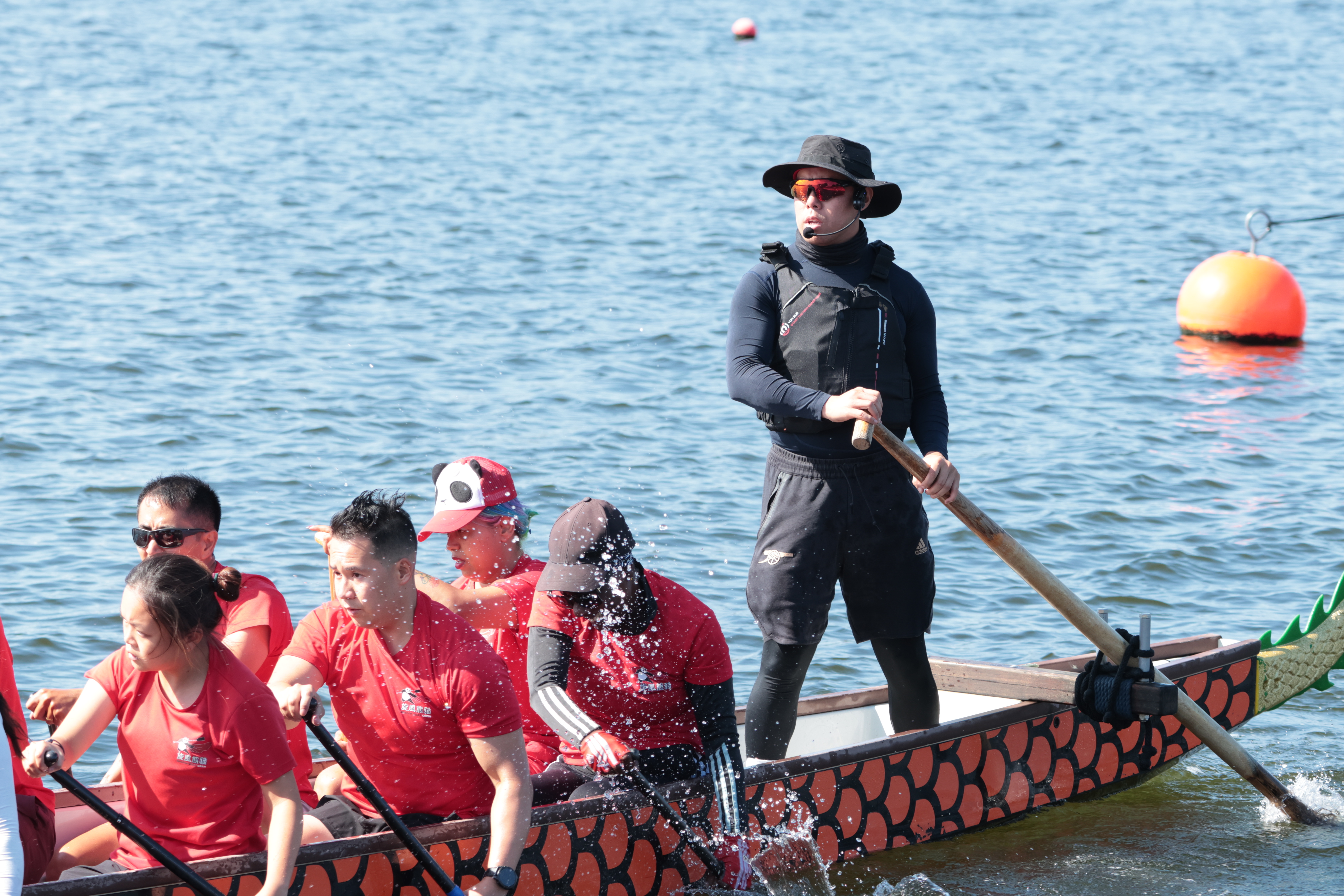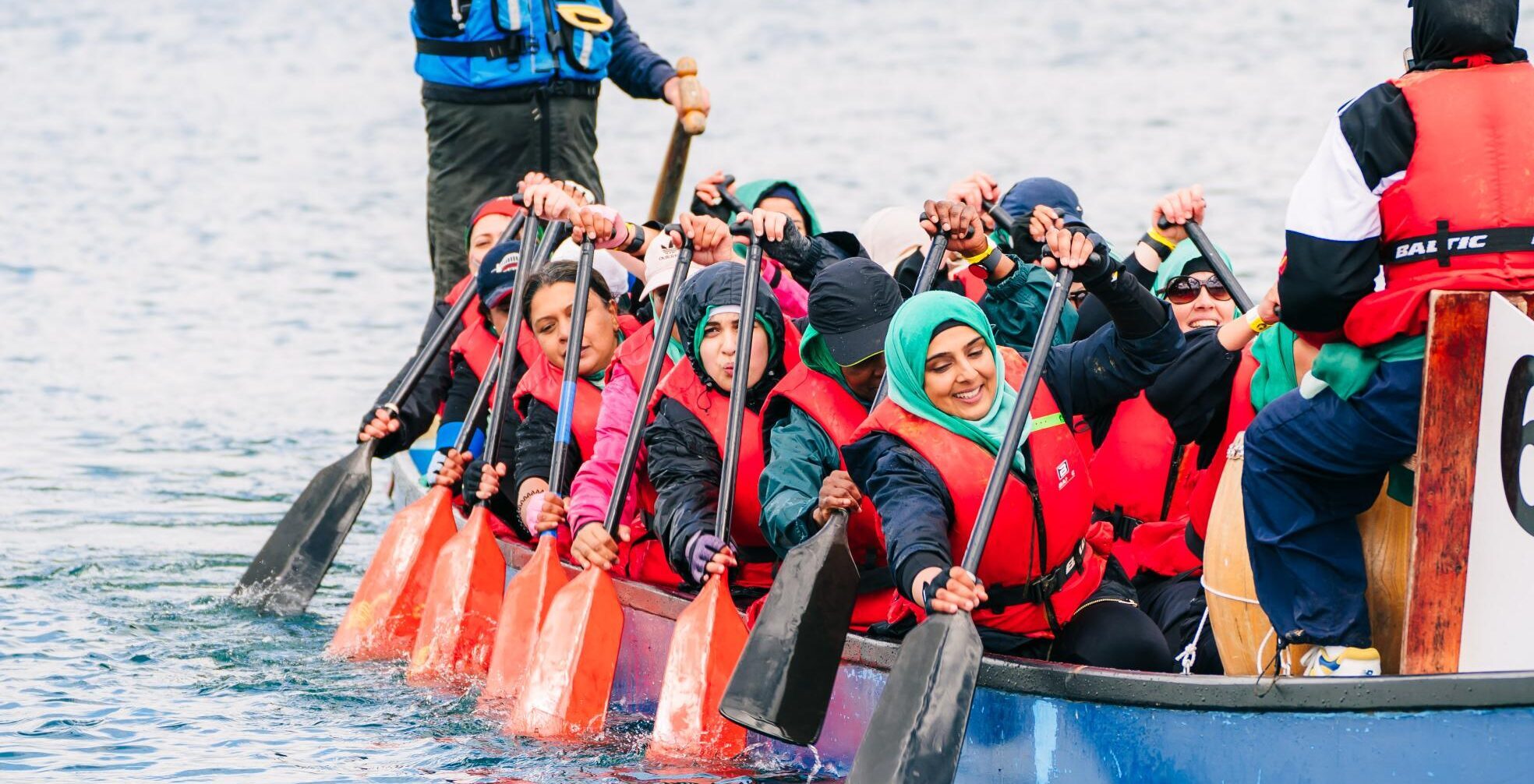
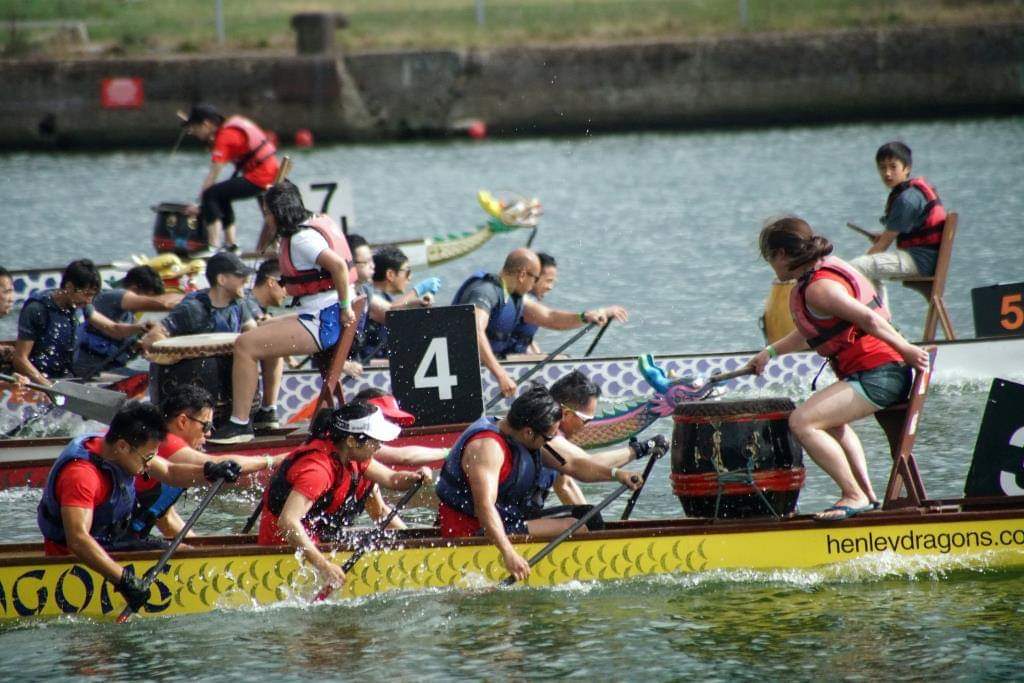
Watch a dragon boat crew that is firing on all cylinders and the boat looks like it is barely disturbing the water. Watch one that is not, and the splash tells you everything before the stopwatch does. The difference usually has nothing to do with fitness or strength. It is timing.
What timing actually means
Timing is every paddle entering the water at the same moment, on the same angle, and coming out together too. It sounds simple. In a twenty paddler boat, it is not. Each paddler sits a different distance from the front of the boat, hears the calls slightly differently, and has their own natural rhythm built up from whatever sport or exercise they did before. Timing training is the process of turning twenty different rhythms into one.
Why it beats raw power
A crew of strong individual paddlers who are out of time will lose to a lighter crew that moves as one unit. When paddles enter and exit together, the boat glides between strokes instead of lurching from side to side. When they do not, paddlers end up working against each other, some still pulling while others have already started their recovery, some pulling on one side while the boat is still rocking from the other. The energy cancels out instead of adding up, and a crew can be paddling flat out and still going nowhere fast. This is why crews preparing for a race spend far more time on synchronisation than on strength work in the weeks beforehand.
How a crew learns it
Timing starts at the front of the boat. The stroke seat sets the rate and the reach, and everyone behind is following, not leading. Early sessions focus on getting paddlers to watch the stroke seat's blade rather than their own, and to commit to matching it even when their own stroke feels slightly wrong as a result. It is uncomfortable to begin with. Paddlers want to paddle at their own pace. Racing is not about anyone's own pace, it is about the crew's.
At DBX, coaches with real racing backgrounds run this process. Kit and Jean, former GB squad paddlers, both treat timing as the first thing a crew fixes, before power, before fitness, before anything else. A BDA Level 2 coach is trained specifically to work on this with a crew under racing conditions, which is part of why that qualification matters for clubs preparing to compete.
Drills worth trying
Three things help most crews improve quickly. First, paddle without watching your own blade, looking only at the stroke seat. Second, practise starting and stopping on a single call, with everyone catching and releasing on the same count, not a split second after. Third, slow the rate right down, almost to half speed, so the catch and the exit become deliberate instead of rushed. A crew that can time a slow stroke can time a fast one. The reverse is rarely true, which is why rushing straight to race pace is usually the wrong place to start.
Where to start
None of this needs to be guesswork. If your club crew has a race coming up, or your company team wants a session that actually improves how the boat moves rather than just getting everyone wet, DBX runs corporate event days and club crew race preparation built around exactly this kind of coaching. Get in touch through our enquiry page and we will talk through what your crew needs before the next race.